
IOTILL / ELECTRONIC INVOICING
E-reporting and consumer sales
Do you sell to individuals? Your customers continue shopping as usual. E-reporting changes how certain data from those sales is sent to the tax authority.
Request a demo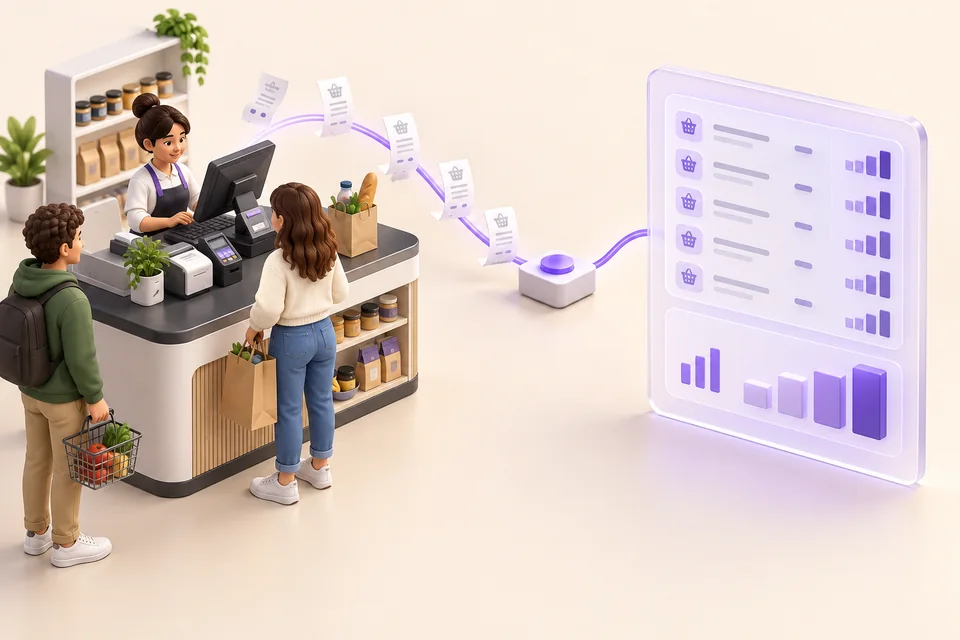
THE ESSENTIALS
In practice, for your shop.
E-reporting means transmitting information about sales covered by the reform. For sales to individuals, this notably involves data grouped by day, such as sales amounts and VAT. You do not create a business invoice for every receipt.
The sale is recorded
Your customer pays for their purchase on the POS, kiosk or mobile terminal you use.
The data is grouped
Information from the relevant sales is used to prepare the data to transmit.
Transmission is arranged
An approved platform receives the data for transmission to the tax authority.
01
Checkout remains familiar for your customer.
Your customer chooses their items, pays and receives a receipt. They do not need to become a business customer for the sale to fall within e-reporting.
On your side, relevant sales contribute to a set of data: notably dates, amounts and VAT. For sales to individuals, this information is grouped by day. The French tax authority specifies that the customer’s name is not transmitted in this e-reporting.
02
Start with the sales you already make.
Whether you take payment on a POS, a kiosk or a mobile terminal, the starting point is the recorded sale. iotill prepares the relevant data as part of your sales management.
To prepare your installation, review the available data, chosen platform and planned connection with your reseller. The aim is to understand how information moves from your sales to transmission, and where to check that transmission has taken place.
03
Card or cash: the payment method does not determine everything.
A sale to an individual may fall within scope whether paid by card or cash. Your payment-method breakdown remains useful for monitoring activity, but it does not by itself tell you which data must be reported.
You will also encounter the term “payment e-reporting”. It concerns certain transactions and information about when they are paid. Your accountant helps identify what applies to your business and how often. Your reseller then explains how to prepare and transmit this data with your installation.
Straightforward answers to your questions.
- Am I affected if I only sell to individuals?
- You may be subject to e-reporting. Your activity, transactions and tax situation also matter. Your accountant can confirm which obligations apply to your business.
- Do I need to ask for every customer’s name?
- For the e-reporting of sales to individuals described here, data is grouped and the customer’s name is not transmitted. If a customer requests an invoice, the information needed for that invoice is a separate matter.
Sources and updates
This guide presents the French reform. The sources below let you check the rules. Your accountant can confirm which ones apply to your business.
Sources consulted on 12 October 2026.
EXPLORE FURTHER
Continue with the right guide.
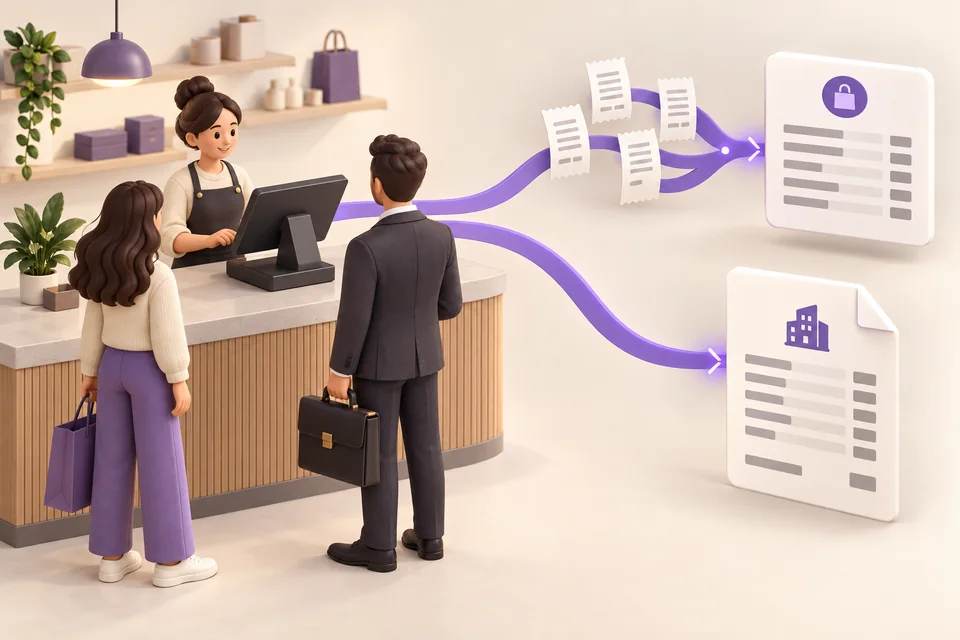
Consumers and businesses: one POS, two workflows
Taking consumer payments and invoicing business customers? Manage both from one POS and understand France’s e-invoicing and e-reporting workflows.
Read the guide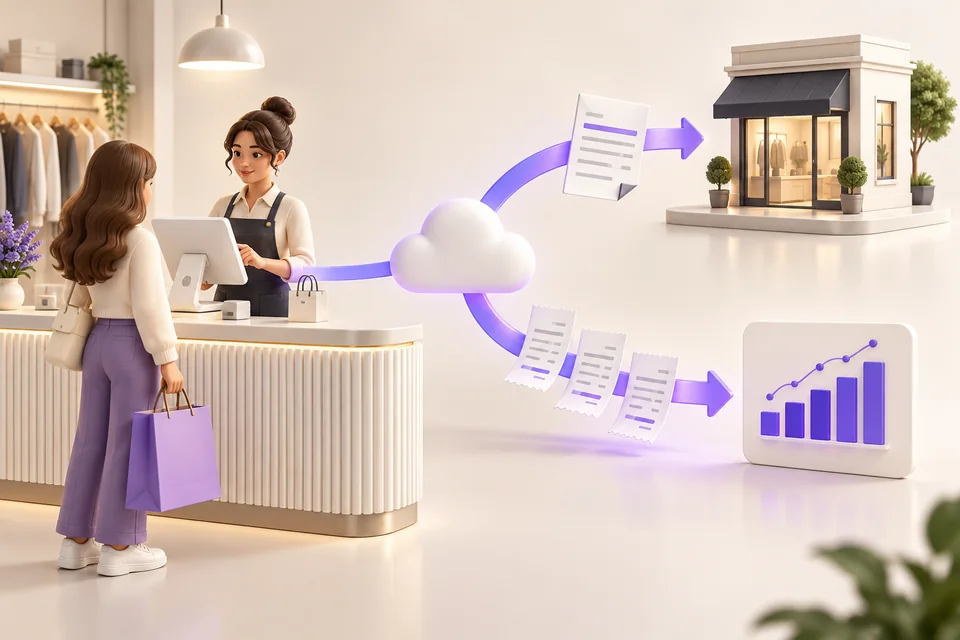
POS and electronic invoicing
Checkout, business customers, Factur-X and QR codes: discover how iotill connects your sales to electronic invoicing.
Read the guide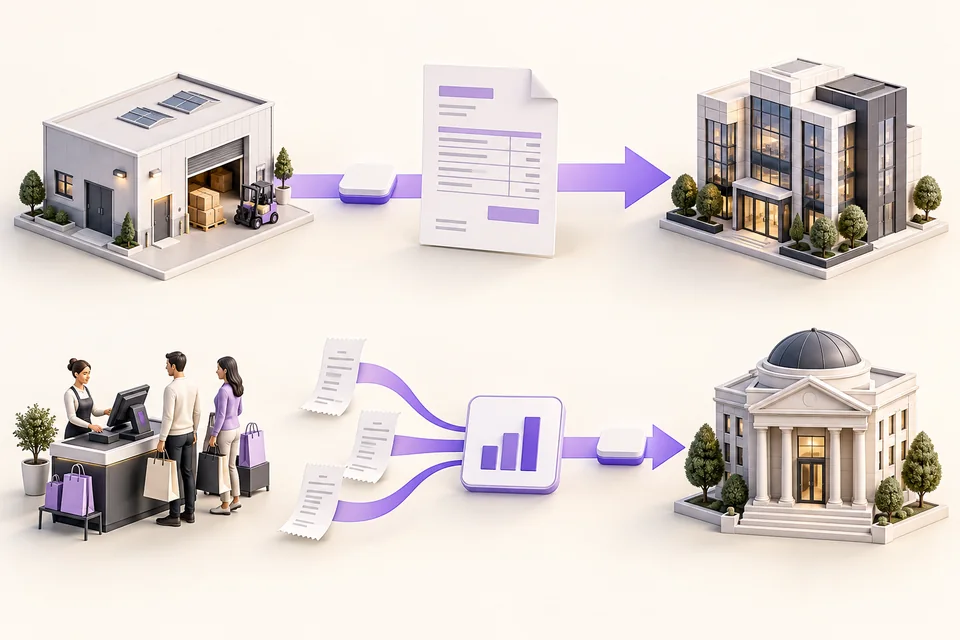
E-invoicing or e-reporting?
An invoice between businesses or sales data to transmit: understand the difference between e-invoicing and e-reporting with simple examples.
Read the guide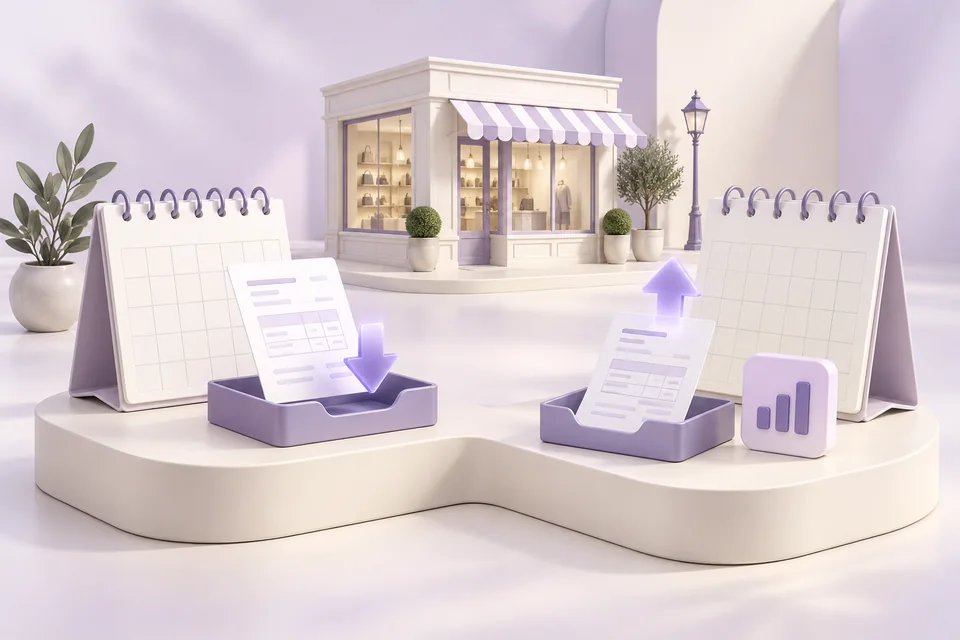
Electronic invoicing: the 2026–2027 timeline
Receiving invoices since September 2026, issuing them according to your business: find the dates and stages to prepare for electronic invoicing.
Read the guide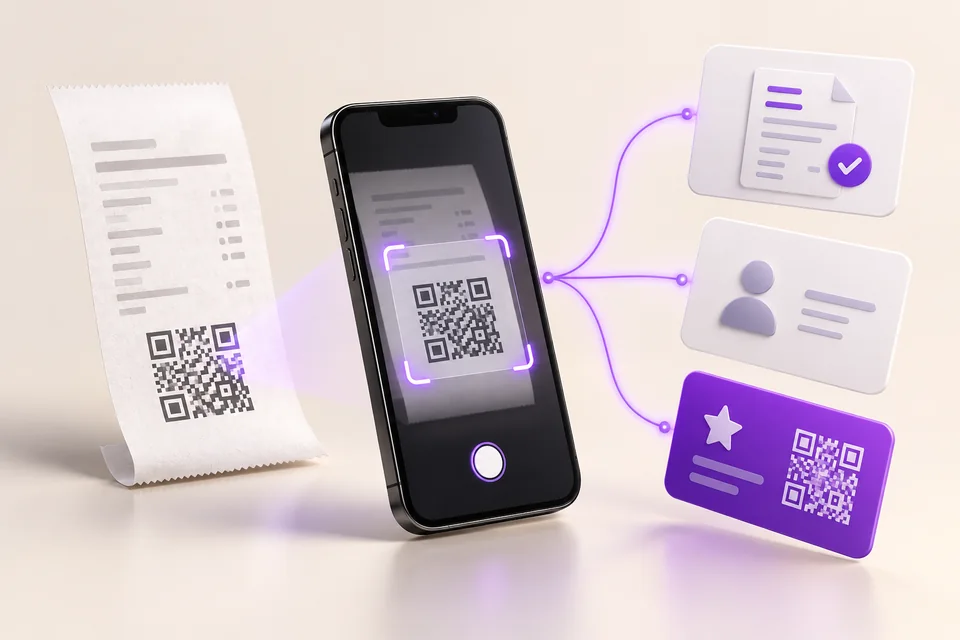
From receipt to invoice
Your customer scans their receipt and creates an invoice on their smartphone. Discover access to customer accounts and loyalty with the iotill QR code.
Read the guideExplore these workflows in iotill.
YOUR SHOP, YOUR WORKFLOW
See how it works for your business.
Request a demonstration using a typical sale or order. You can see the resulting invoice and ask questions about the stages to set up.