
IOTILL / ELECTRONIC INVOICING
Consumers and businesses: one POS, two workflows
One customer pays for a purchase. The next asks for an invoice for their business. You switch between them all day: your POS should support the way you work, without splitting your business in two.
Request a demo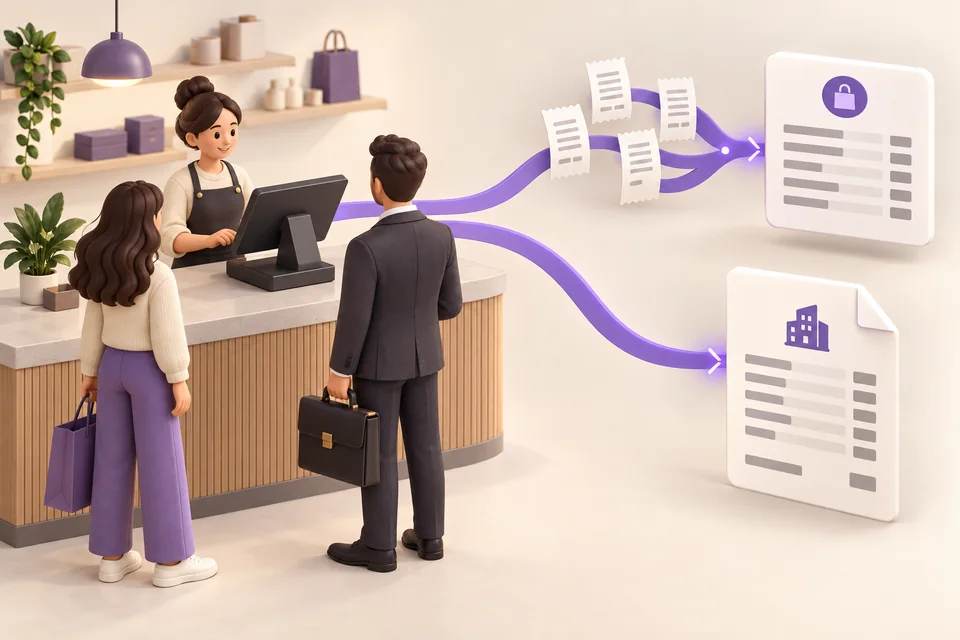
THE ESSENTIALS
In practice, for your shop.
With iotill, you can take consumer payments and invoice business customers from the same POS. France’s reform then distinguishes transactions: eligible B2B invoices follow e-invoicing, while eligible consumer sales feed e-reporting. The proportion of each customer group does not determine that treatment.
A sale at the POS
Record products in the same tool, whether the buyer is a consumer or a business customer.
The right document for the customer
A receipt, an invoice addressed to the business or records on a business account: the document follows the sale.
The right treatment for the transaction
Prepare the relevant invoices and data. Regulatory transmission is arranged through an approved platform.
01
80% consumers, 20% businesses: both matter.
These proportions are an example, not a regulatory threshold. Even occasional business sales deserve a process as straightforward as everyday sales. Keep your products and your POS; provide the document your customer needs.
The process depends on the transaction and the buyer’s situation. E-invoicing notably covers transactions within the reform’s scope between businesses established in France and subject to VAT. Eligible consumer sales fall under transaction e-reporting. Giving a consumer an invoice does not turn their purchase into a B2B sale.
E-INVOICING
You invoice a business.
For French B2B transactions within scope: a structured invoice exchanged through approved platforms.
E-REPORTING
You transmit sales data.
Including consumer sales within scope: transaction data sent to the authorities.
These diagrams summarise the two principles. The applicable workflow depends on your sale and the customer’s situation.
02
At the counter, keep serving your customers.
A consumer buys a few items and pays at the POS. The sale is recorded and they receive a receipt. For eligible B2C sales, the information needed for e-reporting is notably aggregated by day. This does not mean sending every receipt as an invoice to another business.
The next customer buys for their company and requests an invoice. Use POS invoicing and their business customer account to prepare the document with the company’s details. If the transaction falls under e-invoicing, the invoice follows the required regulatory process. Payment by card, cash or on terms does not, on its own, determine that process.
03
Business customers coming back? Keep their records together.
Some businesses buy occasionally. Others place orders or receive several deliveries during the month. With iotill sales management, quotes, orders, delivery notes and invoices stay linked to the customer account. Select delivery notes to combine into a consolidated invoice at the agreed interval.
Does a customer already have their receipt and want to create an invoice? The QR code lets them do so from their smartphone. This service makes the document easier to obtain; it does not replace the transmission process applicable to an invoice covered by the reform.
04
One management system, with a process to agree with your reseller.
iotill brings payments and sales management together, with Factur-X-compatible invoices. This format combines a readable invoice with data software can process. Preparing the document and ensuring its regulatory transmission are separate steps: agree on the approved platform and connection with your reseller.
To prepare your setup, start with three real examples: a consumer purchase, a business invoice paid at the POS and an invoice combining several deliveries. Check customer information, the resulting document and transmission steps with your reseller and accountant. This gives you practical answers for both groups of customers you serve every day.
Straightforward answers to your questions.
- Do I need two POS systems for consumer and business sales?
- No. iotill lets you take consumer payments and invoice business customers in the same solution. The distinction concerns the document and treatment of the transaction, not the number of POS terminals.
- I mostly sell B2C: can my occasional B2B invoices still be affected?
- The share of business sales does not, on its own, determine your obligations. B2B transactions within the reform’s scope remain affected, according to the timetable applicable to your business.
- Does an invoice requested by a consumer fall under e-invoicing?
- Not simply because an invoice is issued. The customer’s situation and the nature of the transaction matter. A sale to a consumer remains a B2C sale.
Sources and updates
This guide presents the French reform. The sources below let you check the rules. Your accountant can confirm which ones apply to your business.
- French tax authority · Identify your situation ↗
- French tax authority · Transaction data ↗
- French tax authority · The role of approved platforms ↗
Sources consulted on 12 October 2026.
EXPLORE FURTHER
Continue with the right guide.
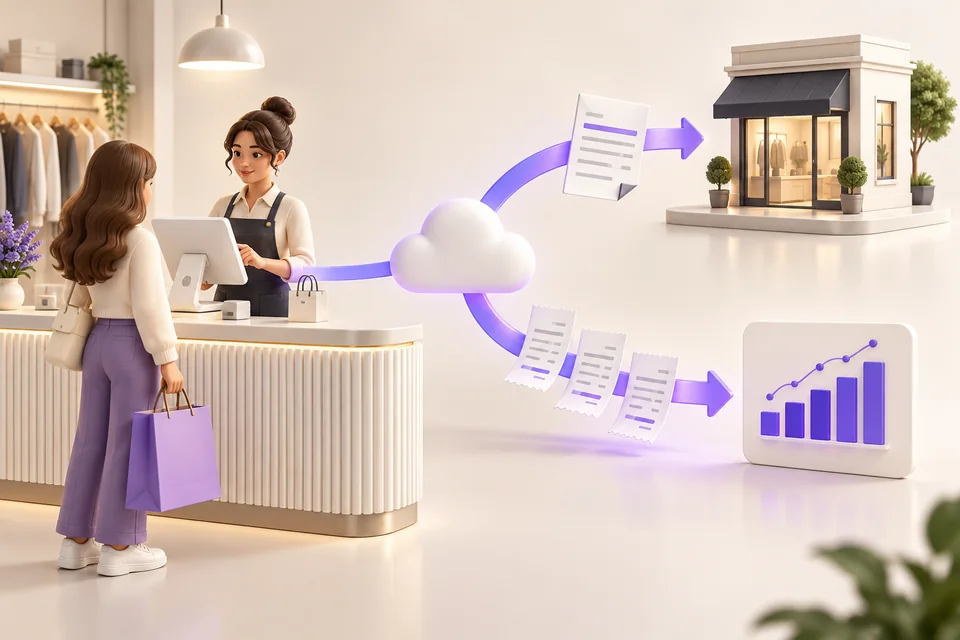
POS and electronic invoicing
Checkout, business customers, Factur-X and QR codes: discover how iotill connects your sales to electronic invoicing.
Read the guide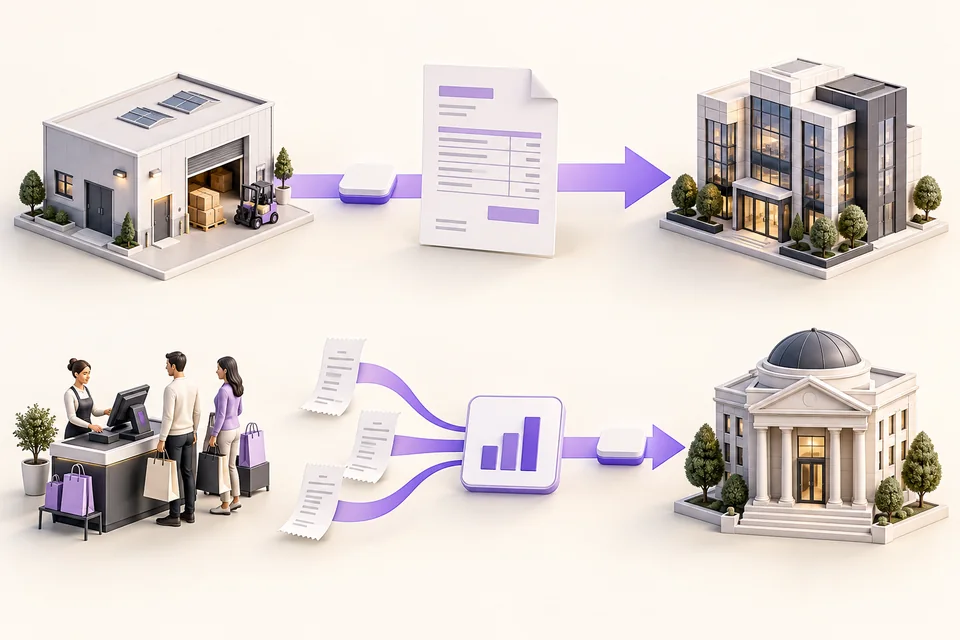
E-invoicing or e-reporting?
An invoice between businesses or sales data to transmit: understand the difference between e-invoicing and e-reporting with simple examples.
Read the guide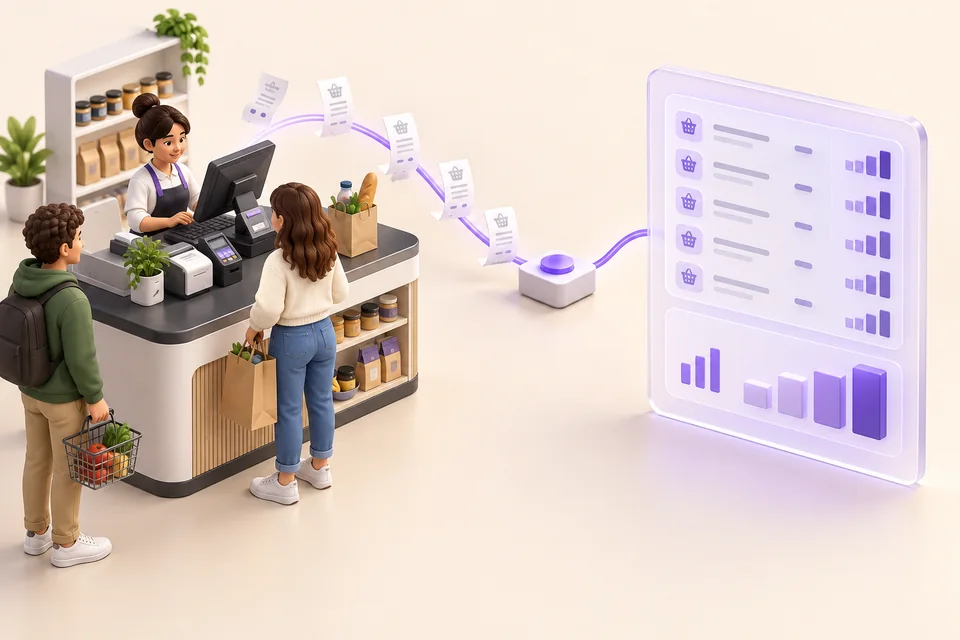
E-reporting and consumer sales
Do you sell to individuals? Discover what e-reporting is, the data to transmit and the stages to prepare your POS.
Read the guide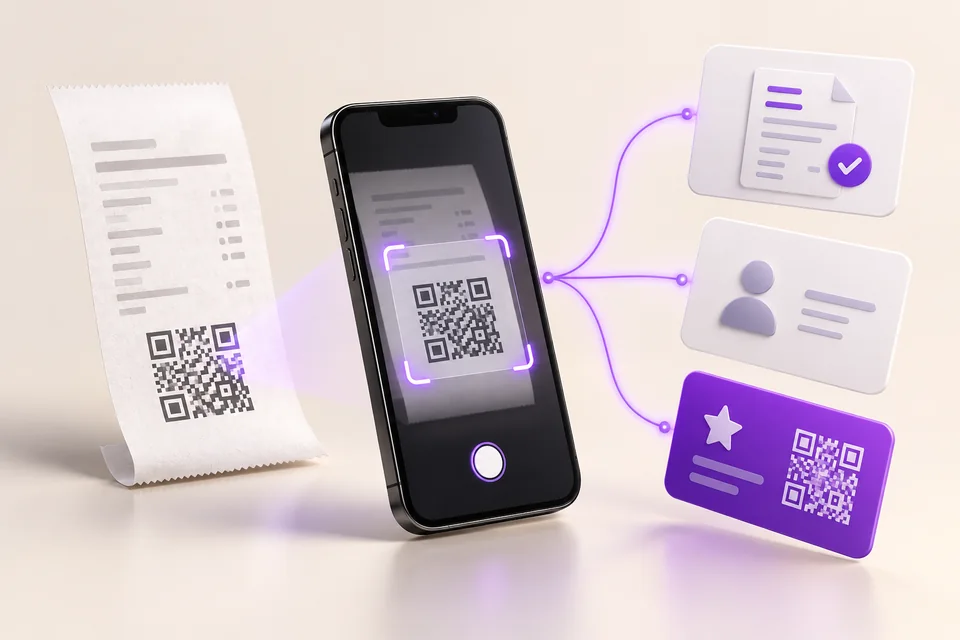
From receipt to invoice
Your customer scans their receipt and creates an invoice on their smartphone. Discover access to customer accounts and loyalty with the iotill QR code.
Read the guide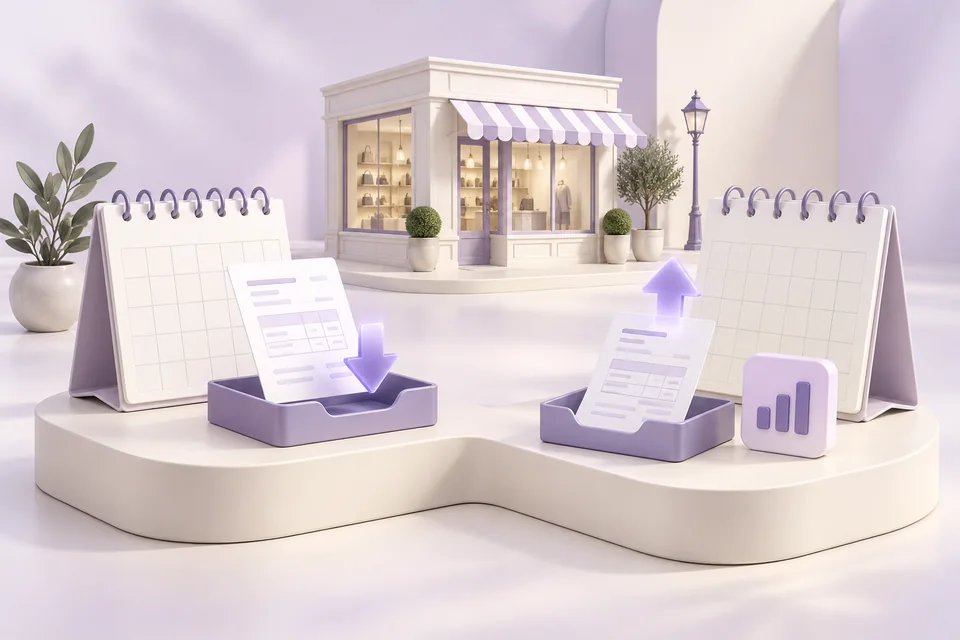
Electronic invoicing: the 2026–2027 timeline
Receiving invoices since September 2026, issuing them according to your business: find the dates and stages to prepare for electronic invoicing.
Read the guideExplore these workflows in iotill.
YOUR SHOP, YOUR WORKFLOW
See how it works for your business.
Request a demonstration using a typical sale or order. You can see the resulting invoice and ask questions about the stages to set up.